Did the Cosmic Microwave Background Preserve a Memory of the Beginning?
A Mathematical Clue Hidden in the Oldest Light of the Universe
Sungchul Ji, Ph.D.
Emeritus Professor of Theoretical Cell Biology
Rutgers University
1. Introduction
For nearly sixty years, the Cosmic Microwave Background (CMB) [1] has been regarded as the oldest light in the observable universe.
It is often described as the “afterglow” of the Big Bang.
Yet the polarized component of that radiation presents a difficult problem.
Between us and the earliest universe lie billions of years of cosmic evolution.
Galactic dust, magnetic fields, gravitational interactions, and countless astrophysical processes have altered the original signal.
Many cosmologists therefore regard portions of the polarized CMB as too contaminated to reveal reliable information about the earliest universe.
But what if some of that information has survived—not in the details of the signal, but in its mathematical structure?
2. Looking Beyond Individual Data Points
Scientific measurements are usually interpreted by examining individual values.
Another possibility is to examine the shape of an entire distribution.
Sometimes the detailed information has been partially lost, while the overall mathematical pattern remains remarkably stable [1a].
Nature often preserves patterns even when individual events become highly disordered [1b].
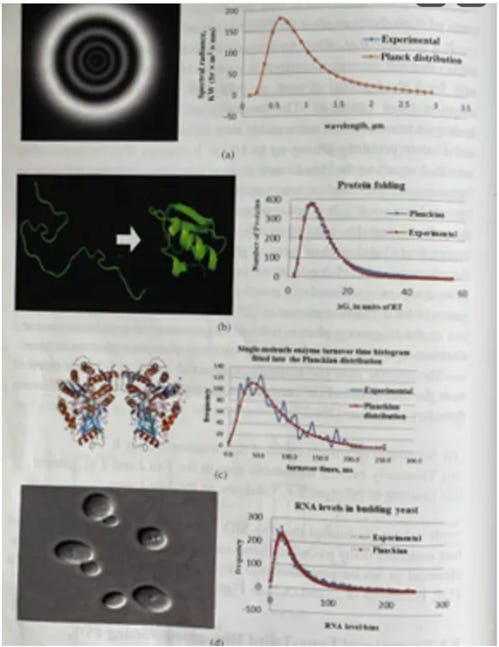
Figure 1 (blackbody radiation; protein folding; enzyme catalysis; mRNA
metabolism. Reproduced from [4]
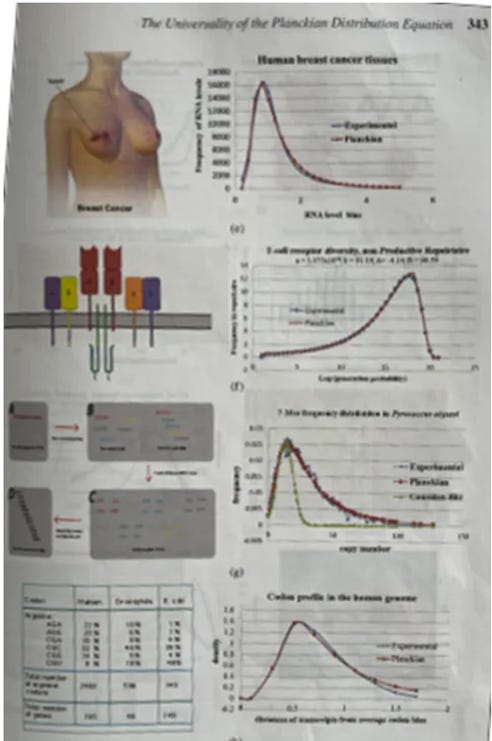
Figure 2 (; human breast cancer; T-cell receptor diversity; 7-mer DNA
frequency; codon profile in human genome. Reproduced from [4].
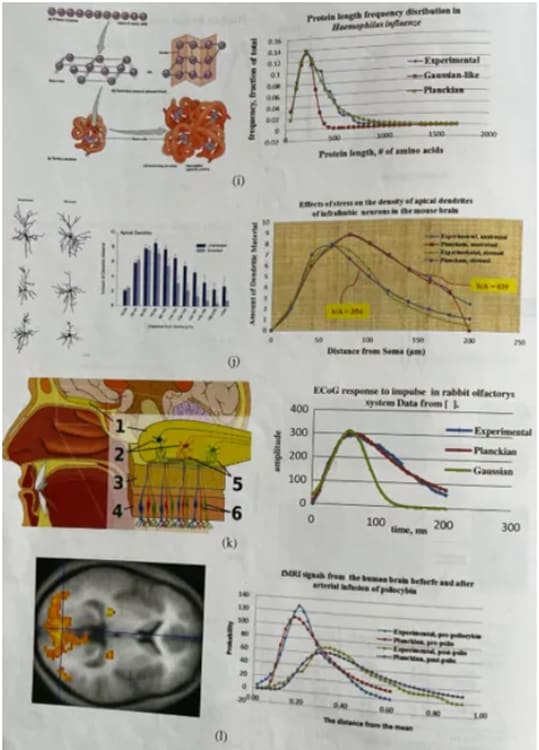
Figure 3 ( protein length frequency distribution in H. influenzas;
effects of stress in neuronal density in the mouse brain; Eco response t
impulse in rabbit olfactory neurons; fMRI signal from human brain
before and after psilocybin injection. Reproduced from [4].
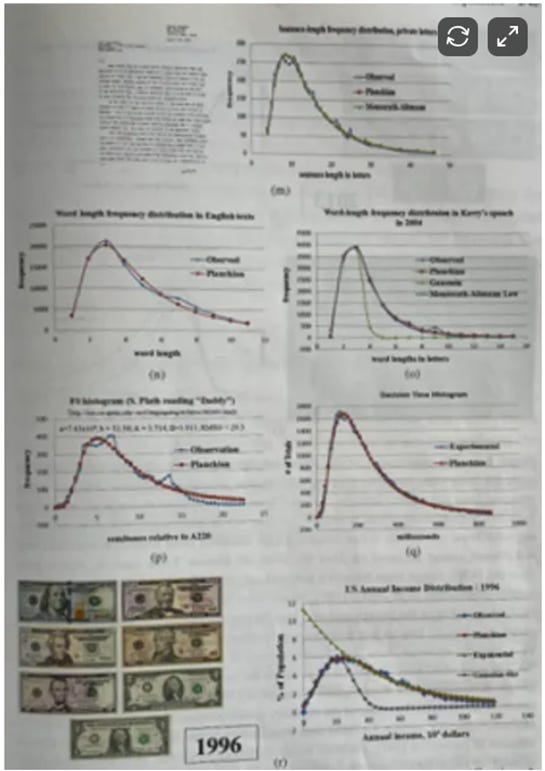
Figure 4 (sentence -length distributions in private letters;
word-length distribution in English letters; word-length
distribution in Kerry’s speech; decision-time histogram US
income distribution in 1996. Reproduced from [4].
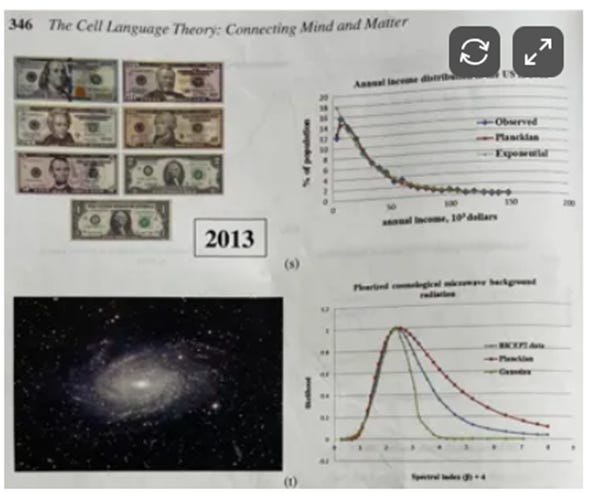
Figure 5 (US annual income distribution in 2013; polarized cosmological
microwave background radiation. Reproduced from [4])
3. An Unexpected Mathematical Pattern
Several years ago, I developed what I called the Planckian Distribution Equation (PDE).
Originally derived from Max Planck’s blackbody radiation law, the PDE was generalized to describe a wide variety of long-tailed distributions.
To my surprise, it successfully approximated data from remarkably diverse fields:
blackbody radiation,
protein folding,
enzyme catalysis,
RNA metabolism,
T-cell receptor diversity,
protein lengths,
neuronal firing,
fMRI signals,
language statistics,
income distributions,
and many other biological and social systems.
These systems differ enormously in scale and mechanism.
Yet they exhibit a remarkably similar mathematical form.
4. Applying PDE to the Polarized Cosmic Microwave Background
I then asked a simple question.
Would the polarized Cosmic Microwave Background display the same mathematical behavior?
Using a hand-digitized version of the published BICEP2 histogram [2] , I compared three descriptions:
a Gaussian distribution (green),
the observed data (blue),
the Planckian Distribution Equation (red).
The result was unexpected.
The PDE reproduced much of the observed long-tailed structure more closely than a simple Gaussian mode (see the last plot in Figure 5).
Although the fit was not perfect, the agreement suggested that the data retained a measurable degree of mathematical organization.
5. Randomized—but Not Completely Random
This observation led to an interesting possibility.
The polarized CMB has clearly undergone enormous modification since the early universe.
Galactic dust almost certainly altered portions of the original signal.
Yet if the PDE captures genuine structure that a Gaussian model does not, then the radiation may not have become completely randomized.
Instead, it may retain a surviving mathematical fingerprint of earlier cosmological organization.
In other words, some information may have survived even though much of the original signal has been lost.
6. A Projection Rather Than a Photograph
Within the Three-Layered Reality Hypothesis (TLRH) [5], this possibility takes on an intriguing interpretation.
TLRH proposes three complementary levels of reality.
Layer I
Observable phenomena.
Layer II
Mathematical structures that mediate our understanding of those phenomena.
Layer III
The deeper ontological reality from which observable structures emerge.
In this framework, the PDE belongs naturally to Layer II.
It is not the physical universe itself.
Nor is it merely a subjective invention.
Rather, it functions as a mathematical mediator between observation and deeper reality.
7. The Projection Invariance Principle
This interpretation also illustrates what I have called the Projection Invariance Principle (PIP).
When a higher-dimensional structure is projected into a lower-dimensional world, much information may be lost.
Yet certain mathematical invariants survive the projection.
A familiar example is the shadow of a three-dimensional object.
Although depth disappears, important geometric relationships remain.
Perhaps cosmology works in a similar way.
The early universe may no longer be directly observable.
But certain mathematical patterns may survive as invariant signatures embedded within observable data.
8. A Possible Geometric Interpretation
This idea naturally connects with the Geometry of Reality [3].
In that framework:
The observable universe corresponds to Layer I.
Mathematical structures such as the PDE occupy Layer II.
The deeper cosmological source corresponds to Layer III.
If the PDE indeed represents a projection invariant, then the polarized CMB may not simply be random radiation.
It may instead be a lower-dimensional mathematical shadow of a richer underlying cosmological structure.
This does not demonstrate that the universe is four-dimensional in the geometric sense proposed by TLRH.
Rather, it suggests that observable cosmological data may preserve mathematical traces of a deeper level of organization.
9. A Hypothesis Worth Testing
This interpretation remains speculative.
Many alternative explanations are possible.
The observed agreement between the PDE and the polarized CMB histogram (see Figure 5) may arise from statistical effects, observational biases, or other physical mechanisms not yet understood.
The hypothesis, therefore, requires further investigation using independent datasets, improved fitting procedures, and rigorous statistical analysis.
Science advances by testing hypotheses rather than assuming them.
10. Conclusion
Perhaps the most remarkable feature of mathematics is its ability to reveal order where direct observation sees only complexity.
The polarized Cosmic Microwave Background may still contain echoes of the earliest universe.
Not necessarily as pristine images.
Not even as untouched physical signals.
But as persistent mathematical patterns.
If future work confirms that these patterns are genuine rather than accidental, they may point toward a profound possibility.
The oldest light in the universe may still carry the imprint of a deeper order—not as a photograph of the beginning, but as a mathematical shadow of a reality that extends beyond what we can directly observe.
In that case, mathematics would not merely describe the universe.
It would become one of the ways the universe remembers its own origin.
Postscript:
This article fits into the broader research program I have been developing over the past year. Earlier articles introduced the Three-Layered Reality Hypothesis [4], the Geometry of Reality [3], and the Projection Invariance Principle separately. This article brings them together around a concrete scientific example. It does so without claiming more than the evidence presently supports. The empirical observation is the PDE [1] fits the hand-digitized polarized CMB histogram [2] . The theoretical proposal is that such a fit may indicate a surviving mathematical invariant despite substantial randomization. The geometric interpretation—that this invariant could represent a Layer II “shadow” of a deeper Layer III cosmological organization—is clearly identified as a hypothesis to be tested. Thus, the article invites discussion and further investigation while remaining faithful to the distinction between evidence and interpretation.
References:
[1] Cosmic microwave background radiation. https://en.wikipedia.org/wiki/Cosmic_microwave_background
[1a] Ji, S. (2018). The Cell Language Theory: Connecting Mind and Matter. World Scientific Publishing, New Jersey. Pp. 333360. PDE
[2] Cowen, R. (2015) Gravitational waves discovery now officially dead: Combined data from South Pole experiment BICEP2 and Planck probe point to Galactic dust as confounding signal.
Retrieved from http://www.nature.com/news/gravitational-waves-discovery-now-officially-dead-1.16830 on 01/16/2016
[3] Ji, S. (2025). The Geometry of Reality (GOR): A Triadic Framework for Matter, Mind, and Spirit.
https://622622.substack.com/p/geometry-of-reality
[4] Ji, S. (2018). Op. cit., pp. 3